
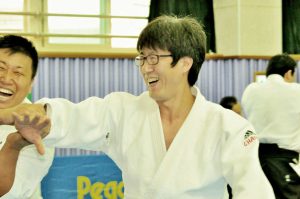
“Can I really start a martial art at my age?” That’s the question most prospective students in their 50s and 60s ask when they first visit a dojo. The short answer: Aikido is actually one of the better martial arts to start later in life.
Why Aikido Suits Seniors
Aikido is a martial art that doesn’t rely on meeting an opponent’s force head-on. Since its techniques center on balance, breathing, and body alignment rather than raw speed or muscle power, it puts less strain on the joints. That’s exactly why you’ll often see students in their 20s and their 60s training side by side in the same class.
Three Benefits Especially Valuable for Older Adults
- Fall prevention: Practicing ukemi (breakfalls) trains the body to avoid serious injury when you trip or fall in everyday life.
- Balance and lower-body strength: Aikido’s circular footwork naturally builds balance and strengthens the legs.
- Mental vitality: The simple routine of learning new techniques, putting on a dogi, and showing up at the dojo brings energy and structure to life after retirement.
What to Know When You’re Just Starting Out
There’s no need to force yourself to keep pace with younger students. Aikido lets you adjust the intensity to match your own condition, so it’s best to talk with your instructor and ease in gradually. For the first month or two, breakfalls and basic stances alone are more than enough of a workout.
A New Routine for Life After Retirement
A dojo is more than just a place to exercise — it’s a community where people of different ages and backgrounds learn and connect with one another. For those hoping to find both a new goal and new relationships after retirement, Aikido can be an excellent choice.