
Walking into a martial arts dojo for the first time can be confusing because of the unfamiliar vocabulary. Here are five basic terms shared across many martial arts, not just Aikido — including Judo, Kendo, and Karate.
1. The Difference Between Kyu (級) and Dan (段)
Most Japanese martial arts use a ranking system that starts at “kyu” and progresses to “dan.” For kyu ranks, a higher number usually means a beginner (e.g., 10th kyu → 1st kyu), while for dan ranks, a higher number means a more advanced practitioner (1st dan → 2nd dan, and so on). Once all kyu ranks are completed, a practitioner tests for their first dan, becoming a black belt.
2. Does Belt Color Indicate Skill Level?
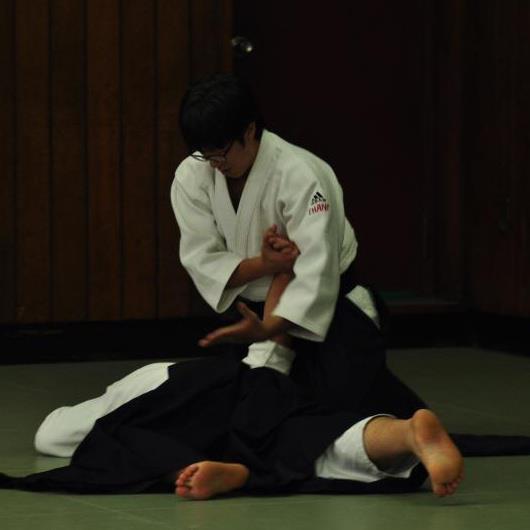
It depends on the art. Some martial arts, like Taekwondo or Karate, use belt colors to show rank. Aikido, on the other hand, mostly keeps students in a white dogi and marks advancement to black-belt level with a black hakama instead. In other words, “color equals skill” isn’t a rule that applies universally across all martial arts.
3. The Difference Between Kata and Sparring
“Kata” (form) is a training method of repeating a fixed sequence of movements to internalize a technique, while “sparring” (randori) involves freely exchanging techniques with a partner in real time. Aikido and classical sword schools tend to emphasize kata-based training, while arts like Judo or boxing place relatively more weight on sparring.
4. The Difference Between Shihan and Instructor
It varies by dojo, but “shihan” generally refers to the head instructor or a teacher with long experience who represents the dojo, while “instructor” often refers to someone who assists the shihan or teaches a specific class. The exact meaning of these titles can differ between schools and organizations.
5. What Is a Ryuha (流派)?
Even within the same martial art, the system of techniques and training methods can differ depending on the founder or lineage — this branch is called a “ryuha.” In swordsmanship in particular, the way the sword is held and the structure of the kata can vary significantly from one ryuha to another.
Once you know these terms, dojo classes start to feel a lot more approachable.