
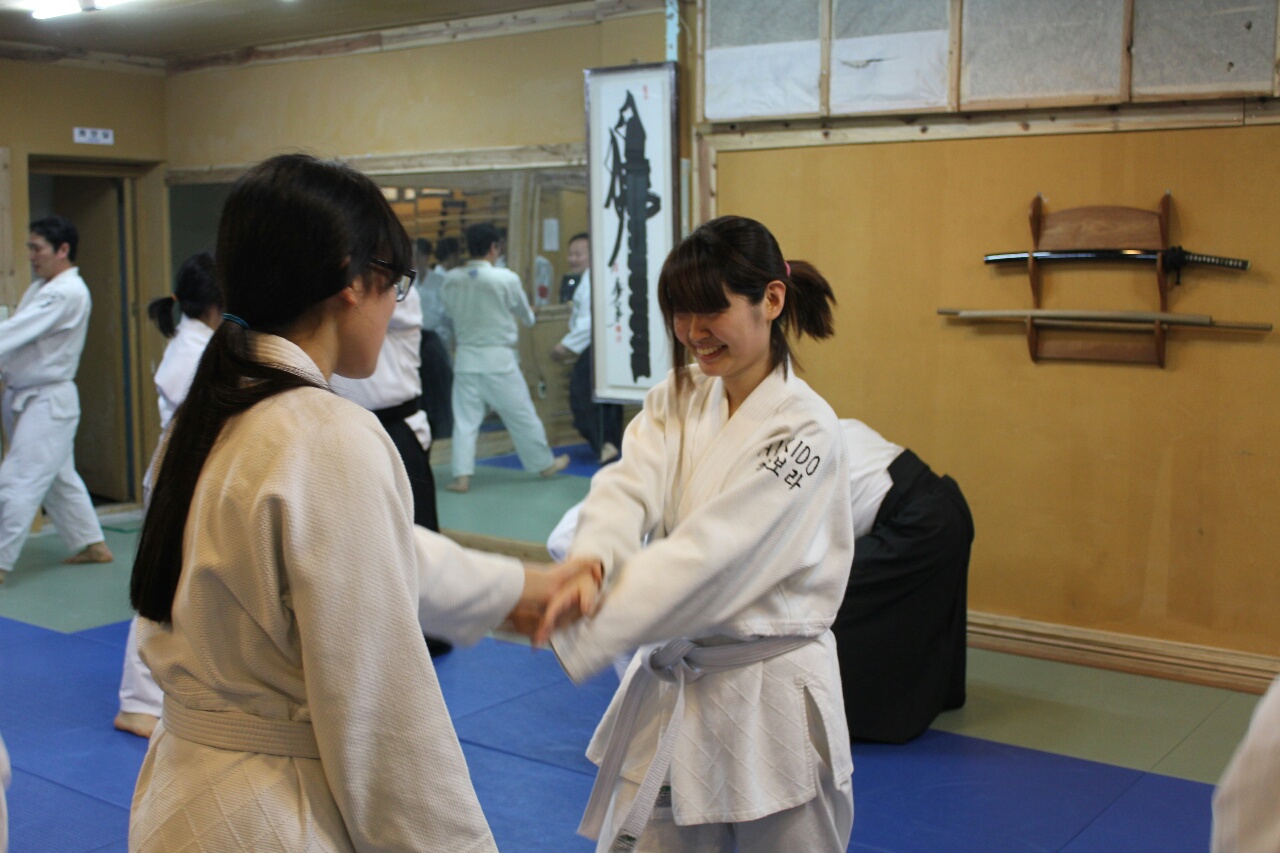
Aikido (合気道) is a martial art that originated in Japan, built around the distinctive philosophy of “harmonizing with an opponent’s force to subdue them.” Unlike many martial arts that emphasize meeting force with force head-on, Aikido focuses on redirecting or controlling an opponent’s attacking energy and direction rather than opposing it directly.
The Core Principles of Aikido
At the heart of Aikido practice are three concepts.
- Go (合, Harmony): Blending with an opponent’s flow instead of colliding with it head-on.
- En (円, Circular Motion): Breaking an opponent’s balance through circular movement rather than straight-line force.
- Ki (気, Energy): Using breath and focus together with the body’s strength.
Because of this, Aikido is known as a martial art that people of any age, gender, or build can learn, regardless of size or muscular strength.
What Beginners Learn First
When you first step into a dojo, the first thing you learn isn’t a flashy technique — it’s ukemi, the art of falling safely.
Learning to fall safely is the starting point of all practice.
Every dojo teaches it a little differently, but Aikido is a martial art that teaches you how to fall down and get back up again.
Only by learning to fall well can you learn to rise well.
From there, you move on to basic stances, techniques for responding when your wrist or arm is grabbed, and footwork for turning your body to redirect an opponent’s force.
How Aikido Differs from Other Martial Arts
Unlike martial arts centered on competition or sparring, Aikido is practiced mostly through repeating set forms (kata).
Rather than aiming to win or lose, its purpose is to subdue an opponent without causing injury, which is why it is often regarded as a martial art focused on self-defense and mental-physical cultivation.
Who Should Consider Aikido
- Those who want to learn a martial art without intense sparring
- Those who want to develop flexibility and a sense of balance
- Those looking for an activity they can sustain long-term regardless of age or fitness level