
When people hear “a martial art that uses a sword,” most think of Kendo. But beyond Kendo, classical sword traditions like Katori Shinto-ryu also exist. Both are “sword arts” in name, but they differ clearly in purpose and training method.
Different Origins
Katori Shinto-ryu was born in the 15th-century Muromachi period as a martial art meant to help warriors survive real battle. Modern Kendo, on the other hand, developed after the Edo period once the shinai and protective armor became widespread, evolving into a form that allowed safe competition — and in the modern era, it was systematized as both a sport and a tool for personal character development.
Training Method: Sparring vs. Kata
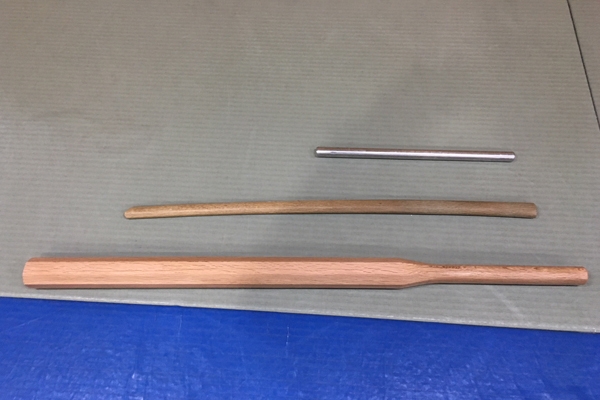
Kendo is trained mainly through sparring, with practitioners wearing the shinai and armor and competing to strike designated targets — the head, wrist, torso, and thrust. Because matches have a clear winner and loser, quickness, spirit, and an understanding of scoring criteria are important. Katori Shinto-ryu, by contrast, is practiced with a bokken or live blade, with two partners performing fixed kata in precise sequence and spacing. Rather than free sparring, it’s a method of internalizing the principles of real combat swordsmanship through predetermined attacks and responses.
Weapons and Technical Scope
Kendo is close to a single-discipline art centered on the shinai, while Katori Shinto-ryu, as mentioned earlier, is a comprehensive system spanning the sword, spear, naginata, staff, and unarmed grappling. This reflects the needs of warriors in the past, who had to respond to a wide range of situations on the actual battlefield.
Not Better or Worse — Just Different Purposes
Kendo has a strong sporting character, testing split-second judgment and mental focus within a clear set of rules, while Katori Shinto-ryu aims to preserve and embody the form and principles of classical swordsmanship in their original state. If you want to compete, Kendo may be the better fit; if you want a deeper understanding of martial history and combat principles, classical swordsmanship may suit you more.
Training Both Creates Synergy
In fact, quite a few practitioners train in both Kendo and classical swordsmanship. The quickness and spirit developed through Kendo and the precise forms and sense of distance learned through classical swordsmanship complement each other well.